
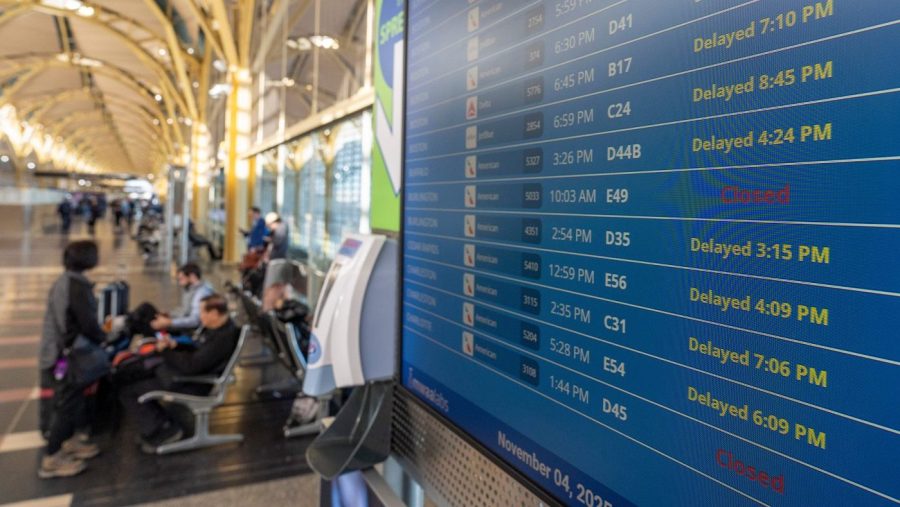
Many of the largest airports across the country will see a noticeable reduction in flight offerings starting Friday, as the Federal Aviation Administration (FAA) implements new steps to maintain air safety amid the ongoing government shutdown.
The preliminary list of 40 airports operating at reduced capacity, obtained by The Hill’s sister network NewsNation, was subject to change. The Department of Transportation (DOT) announced the full list later on Thursday.
Included are virtually all the major air travel hubs — from New York, to Los Angeles, to Washington, D.C., to Miami, to Chicago, to Dallas and many airports in between.
“This isn’t about politics – it’s about assessing the data and alleviating building risk in the system as controllers continue to work without pay,” said Transportation Secretary Sean Duffy said in a statement. “It’s safe to fly today, and it will continue to be safe to fly next week because of the proactive actions we are taking.”
Here’s the full list of affected airports.
- Anchorage International (ANC)
- Hartsfield-Jackson Atlanta International (ATL)
- Boston Logan International (BOS)
- Baltimore/Washington International (BWI)
- Charlotte Douglas International (CLT)
- Cincinnati/Northern Kentucky International (CVG)
- Dallas Love (DAL)
- Reagan Washington National (DCA)
- Denver International (DEN)
- Dallas/Fort Worth International (DFW)
- Detroit Metropolitan Wayne County (DTW)
- Newark Liberty International (EWR)
- Fort Lauderdale/Hollywood International (FLL)
- Honolulu International (HNL)
- Houston Hobby (HOU)
- Washington Dulles International (IAD)
- George Bush Houston Intercontinental (IAH)
- Indianapolis International (IND)
- New York John F. Kennedy International (JFK)
- Las Vegas Harry Reid International (LAS)
- Los Angeles International (LAX)
- New York LaGuardia (LGA)
- Orlando International (MCO)
- Chicago Midway (MDW)
- Memphis International (MEM)
- Miami International (MIA)
- Minneapolis/St. Paul International (MSP)
- Oakland International (OAK)
- Ontario International (ONT)
- Chicago O’Hare International (ORD)
- Portland International (PDX)
- Philadelphia International (PHL)
- Phoenix Sky Harbor International (PHX)
- San Diego International (SAN)
- Louisville International (SDF)
- Seattle/Tacoma International (SEA)
- San Francisco International (SFO)
- Salt Lake City International (SLC)
- Teterboro (TEB)
- Tampa International (TPA)
FAA Administrator Bryan Bedford announced Wednesday that the agency was taking the extraordinary step of reducing flight capacity by 10 percent across 40 “high-traffic” areas in the country.
The plan is to begin the flight reductions on Friday at 4 percent before eventually increasing the cuts to 10 percent by Nov. 14, according to the DOT release. After Friday, the reductions will ramp up to 6 percent by Nov. 11 and 8 percent by Nov. 13.
“We are seeing signs of stress in the system, so we are proactively reducing the number of flights to make sure the American people continue to fly safely,” Bedford said in a statement. “The FAA will continue to closely monitor operations, and we will not hesitate to take further action to make sure air travel remains safe.”
As many as 1,800 flights and 268,000 seats could be affected, The Associated Press reported, citing an estimate from aviation analytics firm Cirium.
Air traffic controllers have been working unpaid since the start of the shutdown Oct. 1, leaving many major air hubs short-staffed and facing significant fatigue and morale issues. Most employees are working six days a week, putting in mandatory overtime, the AP noted.
Updated at 8:45 p.m. EST
